
The Celestial Art of Tamil Nadu
Bharatanatyam
A geometric symphony of expression, originally performed as a spiritual offering in the grand temples of Bharat.
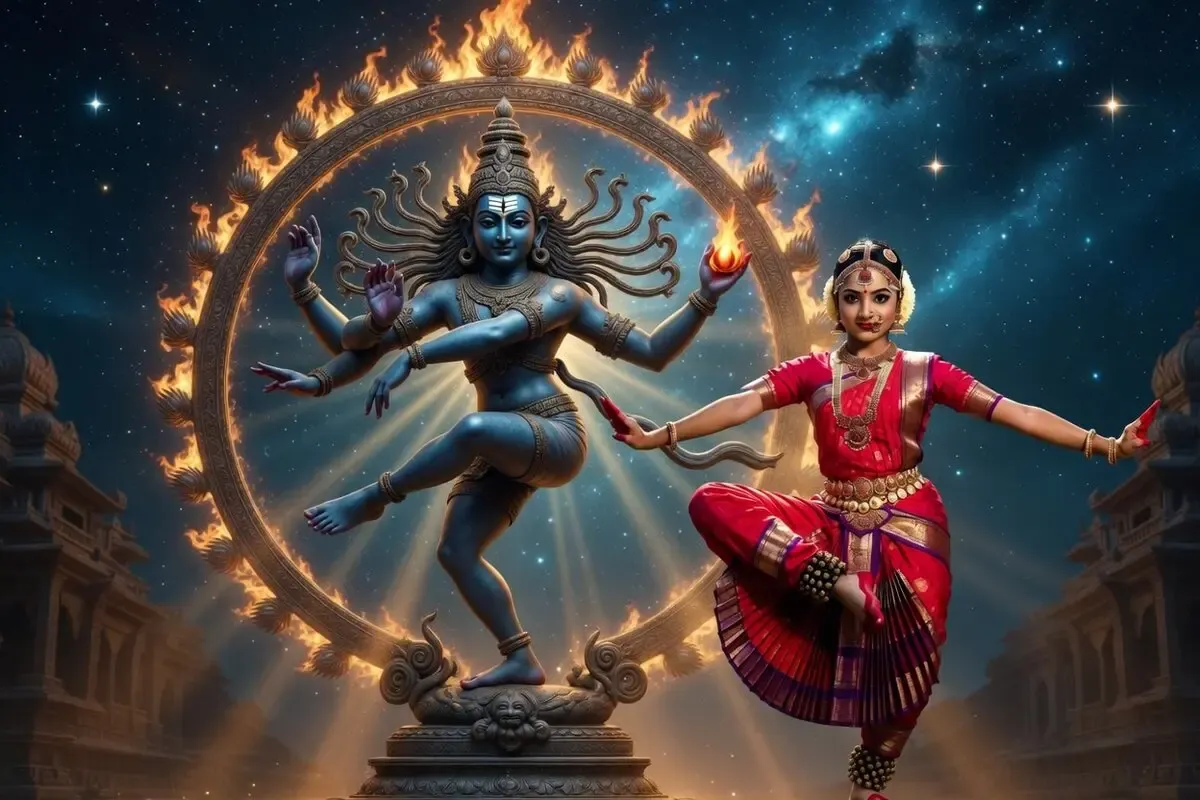
Origins & History
The Devadasi Heritage and Renaissance
Bharatanatyam is widely regarded as the oldest classical dance tradition in Bharat, with its roots tracing back over 2,000 years to the Natya Shastra. Historically known as Sadir or Dasi Attam, it was the sacred preserve of the Devadasis—women dedicated to temple service. For centuries, these dancers performed in the magnificent temple complexes of the Chola and Pallava dynasties. During the British Raj, the art form faced a period of decline, but it was heroically revived in the 20th century by visionaries like Rukmini Devi Arundale and E. Krishna Iyer, who transitioned the dance from the temple sanctum to the modern proscenium stage while maintaining its Vedic sanctity.
Performance Structure
Margam: The Traditional Path
A traditional Bharatanatyam performance follows a strictly defined sequence called the Margam (meaning "path"). It begins with Alarippu, a rhythmic invocation to the gods and the audience, followed by Jatiswaram, which showcases pure technical skill. The centerpiece is the Varnam, the most complex and demanding segment, where the dancer alternates between intricate footwork and Abhinaya (expression). The performance usually concludes with a Thillana, a joyous burst of rhythmic movement, and a Mangalam, a final prayer for peace.
Aesthetics & Attire
Silks, Bells, and Temple Gold
The visual identity of Bharatanatyam is inseparable from its attire. Dancers wear a specially stitched saree made of Kanchipuram silk, featuring a unique "fan" pleat that opens beautifully when the dancer assumes the Araimandi (half-squat) position. The jewelry, known as Temple Jewelry, consists of the Thalaisaman (headpieces representing the sun and moon), Jhumkas (earrings), and an ornate waist belt. A crucial element is the Ghungroo—the heavy bronze bells tied around the ankles that transform the dancer’s feet into a percussive instrument.
Visitor Guide
Witnessing the Grace
Best Places to Watch
The Margazhi Festival in Chennai (Dec-Jan) is the world's largest cultural gathering. The Chidambaram Natyanjali festival offers an authentic temple setting.
Musical Style
It is performed to Carnatic Music. The ensemble includes a singer, a mridangam player, and the Nattuvanar who directs the rhythm with cymbals.
Mudras (Hand Gestures)
Dancers use a complex vocabulary of hand gestures called Hastas. There are 28 single-hand and 24 double-hand gestures used to tell detailed stories.
Spiritual Philosophy
It is known as a "Yoga of the Soul." The sharp, linear movements and triangles created by the body represent the balance between the earth and the heavens.
Angikam Bhuvanam Yasya
Whose body is the entire world, whose speech is the language of all—we bow to that serene Lord Shiva, the Master of Dance.