
The Untamed Hermitage of the Aravallis
Amreshwar Mahadev Temple
Nestled within the rugged mountain passes of Sawai Madhopur, this natural subterranean cave hosts an ancient Svayambhu Shivling nourished by perpetual forest waters.
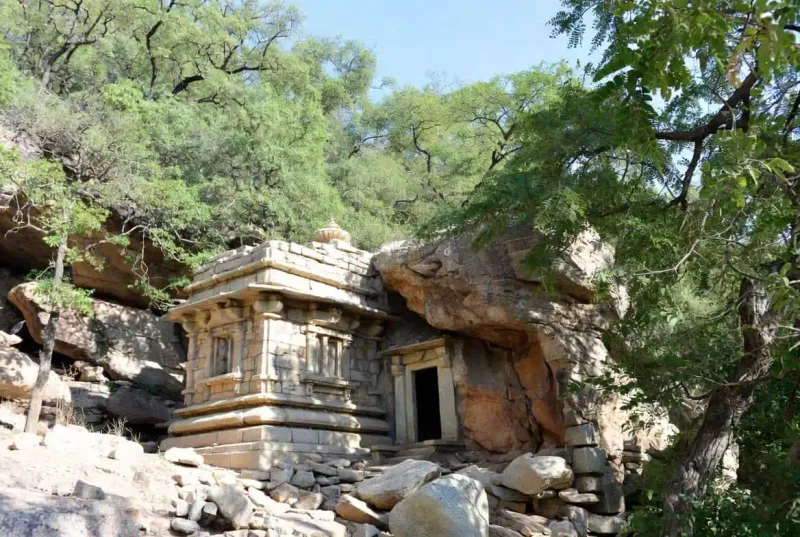
A Union of Wilderness and Devotion
Deeply secluded from the tourist tracks of Rajasthan's palaces, the **Amreshwar Mahadev Temple** embodies the primal, ascetic roots of Shiva worship. Located on the immediate periphery of the Ranthambore National Park ecosystem, this site has served for hundreds of years as a sanctuary for intense meditative practices (sadhana). Here, the boundaries between structural engineering and raw geology dissolve entirely.
The temple is reached by walking down a scenic path bounded by steep rock faces, bringing pilgrims into a quiet valley where the air is noticeably cooler. The constant rustle of dense forest leaves and the sound of dripping mountain springs establish a natural meditative drone that prepares the mind for darshan.
The Cave Sanctum and Natural Abhishekam
The central focus of adoration is a *Svayambhu* (self-manifested) Shiva Lingam situated deep within a low natural cavern. Pilgrims must bend low to enter the inner chamber, a physical act of surrender that mirrors ancient cave initiation rites.
A high-altitude perennial stream trickles down from the rocky plateau above, dropping drops of clear water directly onto the Lingam. This natural water flow acts as a continuous, perpetual *abhishekam* performed by the earth itself. The stone surfaces inside are slick with minerals and moss, highlighting the unbroken connection between the deity and the surrounding wilderness.
Historical Context and Ascetic Lineages
Local oral history indicates that the rulers of Jaipur and nearby regional chieftains would quietly visit this cave to receive blessings from forest-dwelling yogis before embarking on historic military defenses. The site has deliberately been kept free of modern commercial construction to preserve its raw power and protective environment.
Pilgrimage Guide
Practical Navigation & Visitor Logistics
Timings
Open daily from 6:00 AM to 6:00 PM. Visitors are encouraged to leave before sunset due to its location in a wild animal corridor.
The Monsoon Shift
During July and August, the mountain waterfall surges dramatically, turning the entire stone enclave into a breathtaking water sanctuary.
Getting There
Located roughly 7 km from Sawai Madhopur railway station along the route leading toward Ranthambore Fort. Local taxis are easily available.
Nearby Spiritual Circuits
Enhance your wilderness pilgrimage by visiting these adjacent historical landmarks:
- Trinetra Ganesha Temple: Set high within the walls of Ranthambore Fort, this unique temple houses a historic three-eyed idol of Lord Ganesha.
- Chamatkar Ji Jain Temple: Located in Sawai Madhopur, renowned for its highly detailed dark stone icons and ancient miracles.
Frequently Asked Questions
Are wild animals spotted near the temple?
Because the temple sits near the boundaries of Ranthambore National Park, langurs are common, and larger forest animals occasionally pass through the surrounding valleys at night.
Is the trek physically demanding?
The walk from the main road is relatively flat but involves uneven stone steps and natural rocky surfaces. It requires stable footwear but is manageable for most age groups.