
Ram Janmabhoomi · Ayodhya
Ayodhya Ram Mandir
The return of the King of Dharma to his eternal seat on the banks of the Sarayu.
Overview
The Spiritual Heart of Bharat
The Shri Ram Janmabhoomi Mandir is more than a structure of stone; it is the physical manifestation of Ram Bhakti that has sustained the Indian consciousness for eons. Ayodhya, the "unconquerable" city, is revered as the first of the seven sacred Sapta Puri cities, and the temple stands at the spot believed to be the exact birthplace of Lord Ram.
Following a historic consecration (Pran Pratishtha) in January 2024, the temple has become a beacon for millions of seekers. It enshrines Ram Lalla Virajman—the infant form of Lord Ram—depicted with divine grace in dark stone, capturing the innocence and majesty of the Maryada Purushottam.
Architecture
A Marvel of Nagara Design
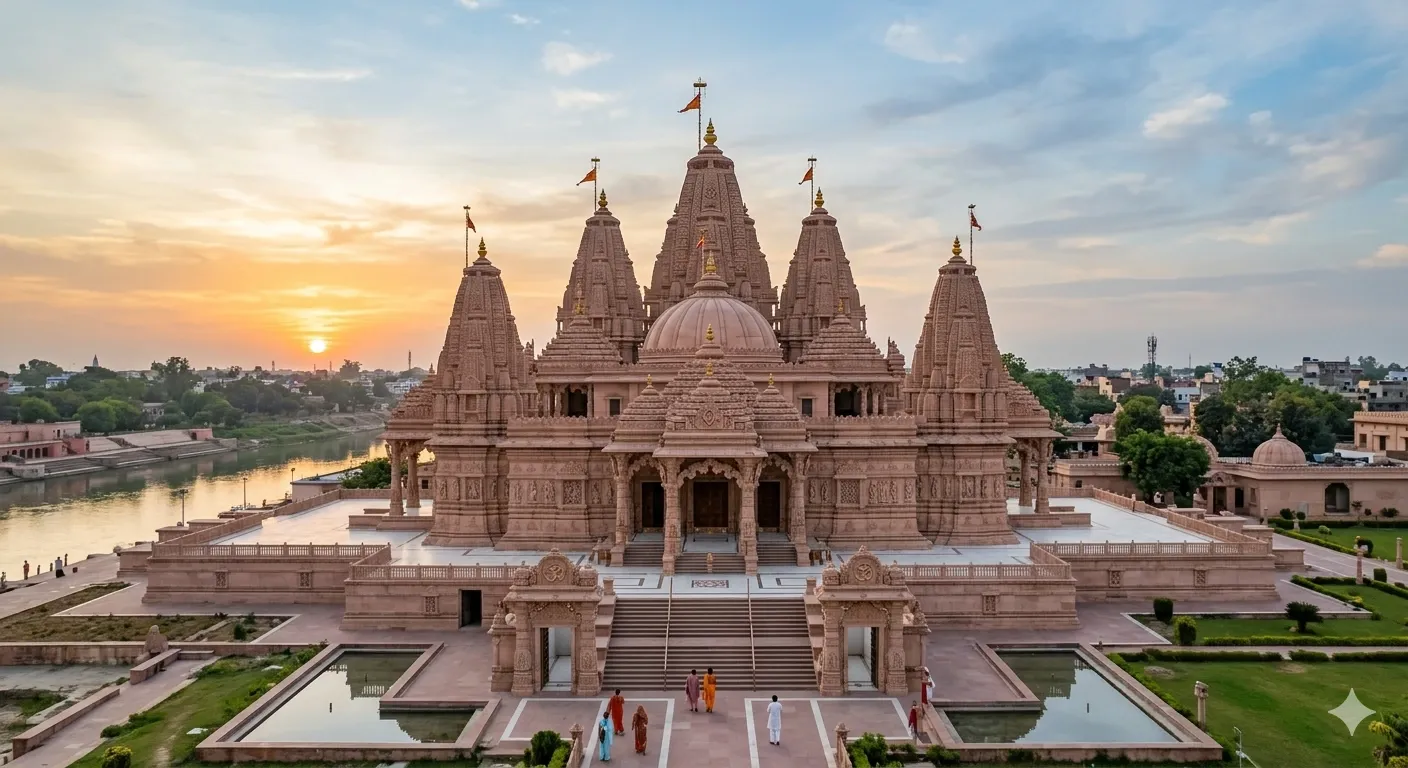
The temple is a grand evolution of the Nagara style, specifically the Maru-Gurjara tradition. Designed by the Sompura family—architects of sacred spaces for generations—it is built entirely without the use of iron or steel, relying instead on interlocking stone joints for a lifespan intended to exceed a thousand years.
The structure features five grand mandapas (halls): Nritya, Rang, Sabha, Prarthana, and Kirtan. Constructed primarily from pink Bansi Paharpur sandstone from Rajasthan, every pillar and ceiling is intricately carved with figures of deities, celestial beings, and motifs from the Ramayana, creating a "visual scripture" for all who enter.
Significance
The Ideal of Ram Rajya
In the spiritual geography of India, Lord Ram represents the perfect human who upholds Dharma (righteousness) regardless of personal cost. The temple serves as a reminder of his journey—the Ramayana—which provides the ethical foundation for millions. To visit Ayodhya is to reconnect with the roots of Indian civilization and the timeless values of truth, sacrifice, and duty.
Ram is not just a name; he is the breath of Bharat. His temple is the restoration of our collective memory and the light of our future.
Pilgrimage Guide
Best Time to Visit
October to March offers pleasant weather. **Ram Navami** (March/April) and **Deepavali** are spectacularly celebrated in Ayodhya.
Temple Timings
Generally open from 6:30 AM to 9:30 PM. Various Aartis (Shringar, Bhog, Sandhya) occur throughout the day.
Nearby Sites
Hanuman Garhi, Kanak Bhawan, and the Sarayu River Ghats for the evening Aarti are essential stops.
Entry Info
Free entry for all. Large bags and electronics are restricted; lockers are available at the facility.
Siyavar Ramchandra ki Jai
May the grace of Lord Ram illuminate your path with wisdom and peace.