
Dharma Shastha · 41-Day Penance · Mountain Sanctuary
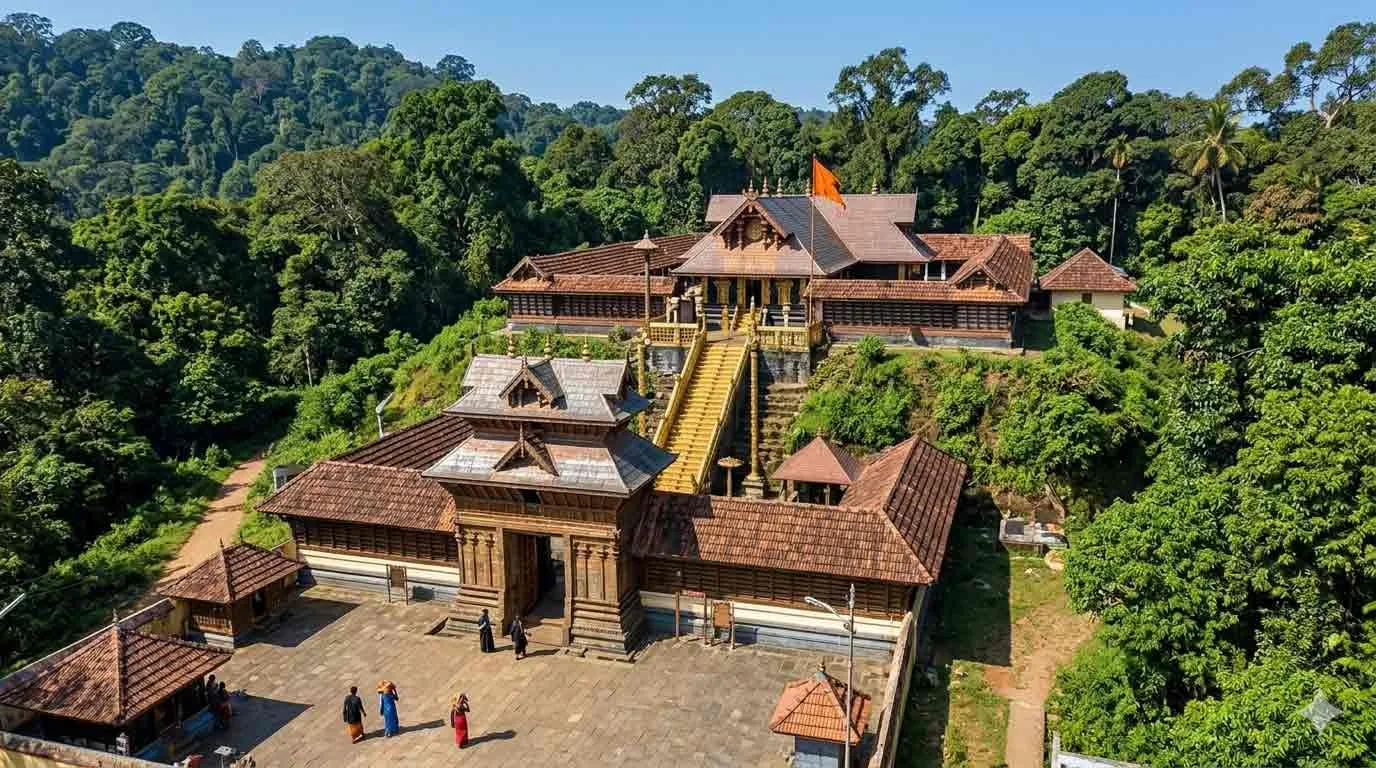
Sabarimala Shri Ayyappa Swamy Temple
Where the forest echoes with the chant of "Swamiye Saranam Ayyappa"—a call to the supreme consciousness.
The Legend of Manikandan
Son of Hari and Hara
Lord Ayyappa is the son of Lord Shiva (Hara) and Mohini (the female avatar of Vishnu/Hari). Found as an infant on the banks of the Pamba river by the King of Pandalam, he was named Manikandan. After fulfilling his divine mission of defeating the demoness Mahishi, he ascended to the hills of Sabarimala to enter into a state of eternal meditation. He promised his devotees that he would be available to them if they approached him with pure hearts and strict discipline.
The Sacred Path
The 41-Day Vratam & Irumudi
The pilgrimage to Sabarimala is unlike any other. It requires a mandatory 41-day *Vratam* (penance) involving a strict vegetarian diet, celibacy, and constant prayer. Devotees carry the **Irumudi Kettu**—a double-compartmented bag containing offerings like coconut filled with ghee. The final climb involves ascending the **Pathinettampadi** (18 gold-plated sacred steps), which represent the 18 Puranas and the victory over human senses.
Phenomenon
Makaravilakku & Universal Brotherhood
The temple is a beacon of social equality; anyone who completes the penance is treated as a "Swamy," regardless of caste or creed. The pilgrimage culminates on the day of Makara Sankranti, when a celestial light known as the *Makara Jyothi* appears on the horizon, signaling the Lord's presence. The journey through the dense tiger reserve, often on foot, is considered a spiritual training for the mind and body.
Pilgrimage Guide
Seasons
Open only during Mandalapooja (Nov-Dec), Makaravilakku (Jan), and the first five days of every Malayalam month.
Route
Traditional trek from Erumeli (approx 61 km) or the shorter route from Pamba (approx 5 km).
Significance
One of the largest annual pilgrimages in the world, attracting over 40 million devotees.
Swamiye Saranam Ayyappa
Bhagwan Ayyappa na ashirvad tamne dhairya ane pavitrata na marg par agal vadhave.